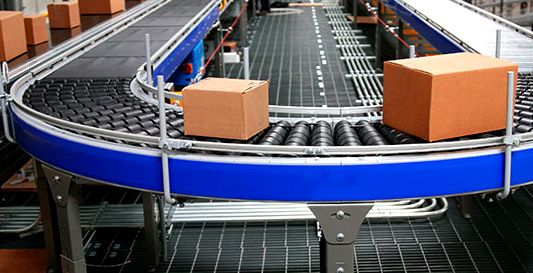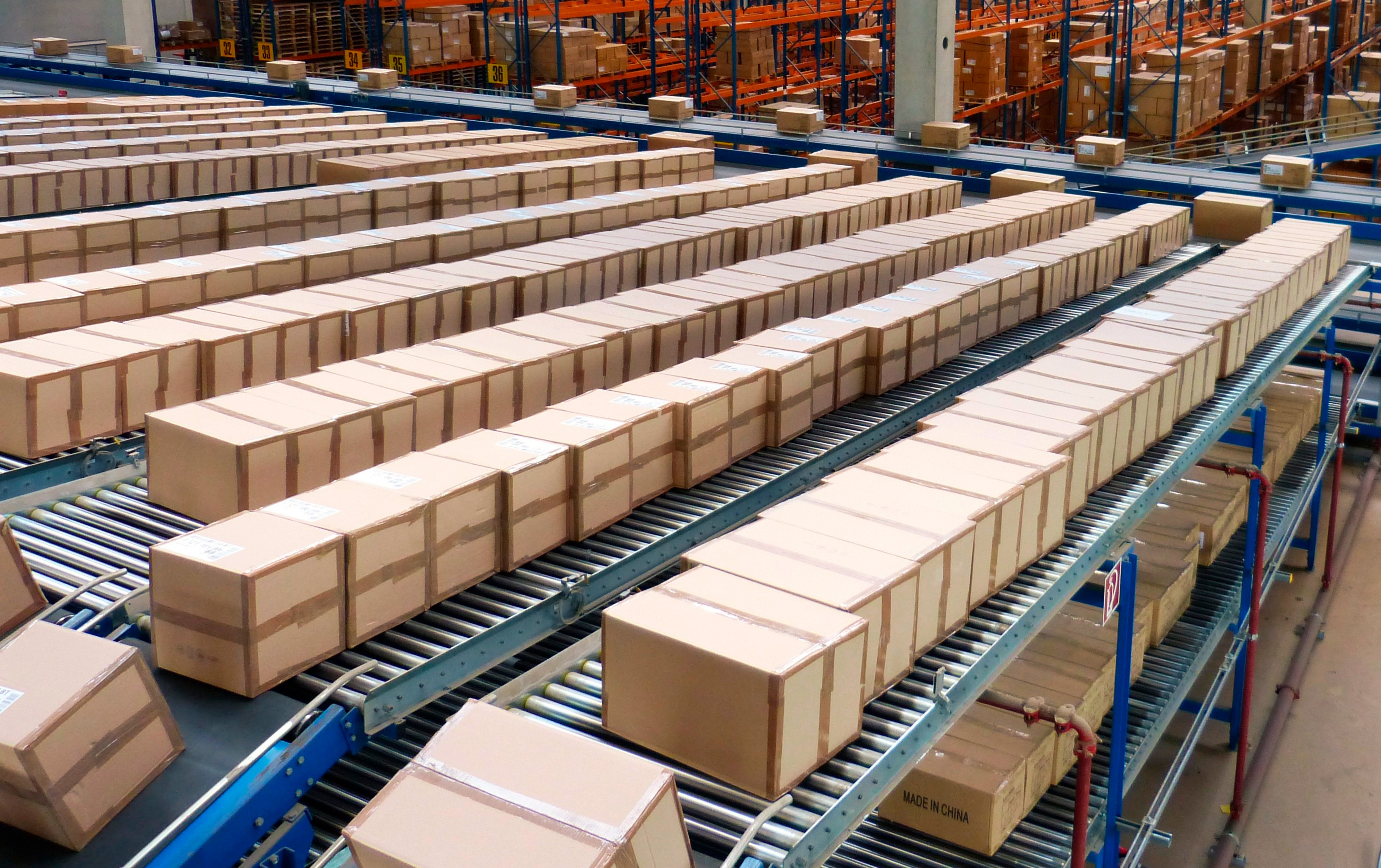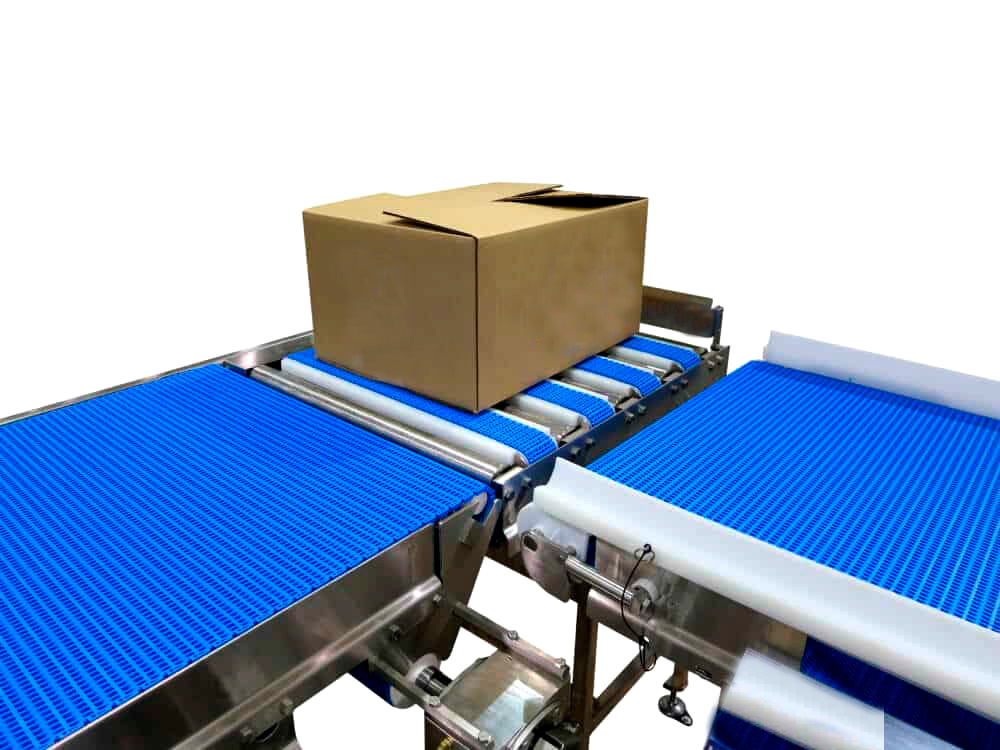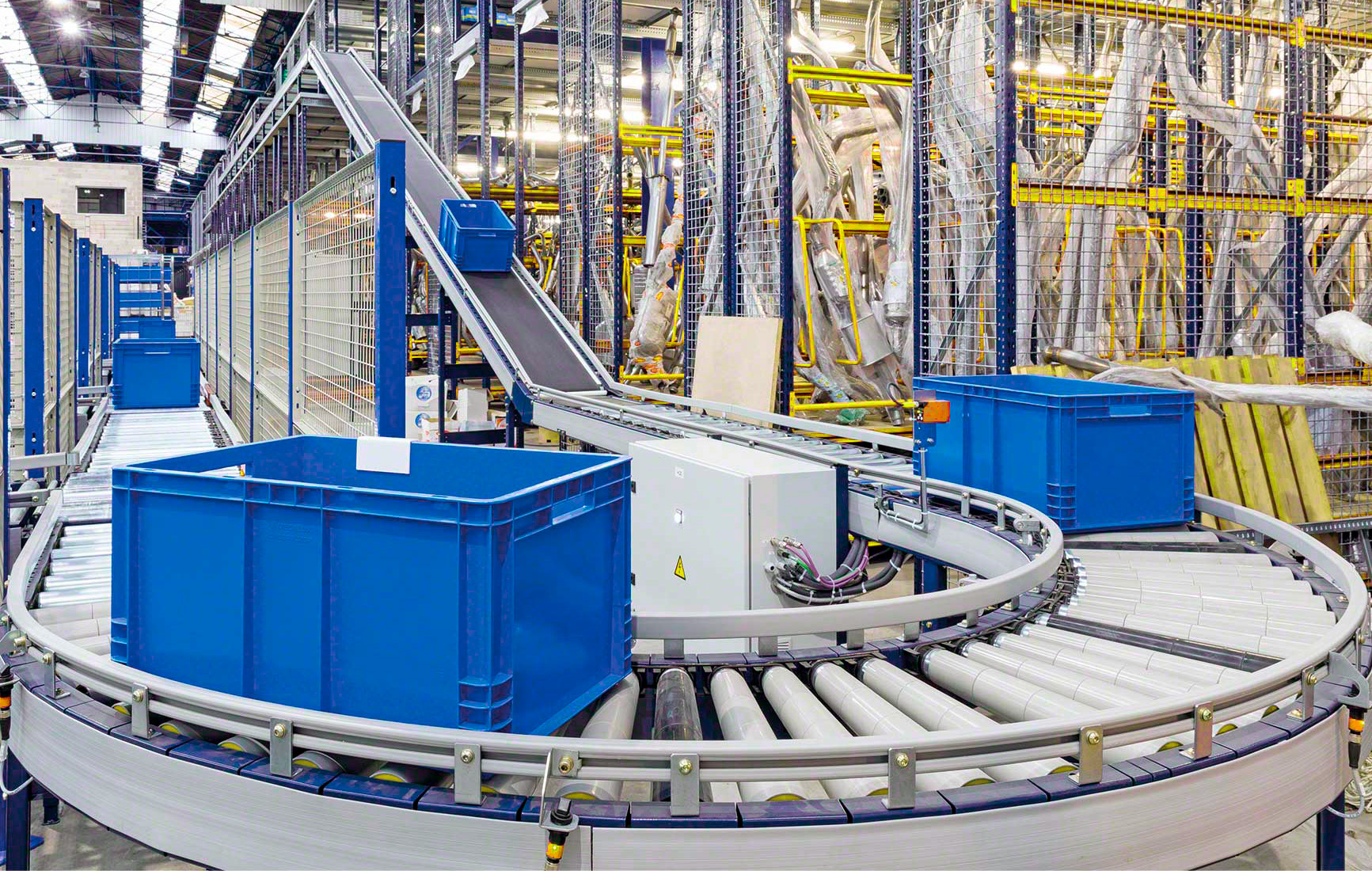
Conveyor belts, also called belt conveyors, are used to move goods and products that require greater stability or that due to their size or characteristics cannot be transported with roller conveyors. Belts can also act as processing and assembly points from which to operate on the items or products being moved.
It consists of the movement of a continuous physical support, the belt or belt, mounted on platforms of varying dimensions and which can have different types of accessories (side guards, stops, derailleurs, railings, barriers, wheels and all kinds of pneumatic or mechanical accessories). The speed and load capacity will depend on both the characteristics of the material to be moved (dust, fine grain, packages, food, etc.) and the type of conveyor belt.
Although its basic principle of operation may seem simple (the movement of a belt due to the rotation of the drums or pulleys that in turn are driven by a motor); The system of a conveyor belt used in industry is much more complex and involves significant technological development with truly innovative technical applications
One of the main materials used is rubberized fabric, but they can have a very variable composition, mainly derived from rubber. We can also find modular plastic belts, made of polyester, PVC, polyamide, acetal, etc. This makes it possible to have conveyor belts for a wide variety of uses.
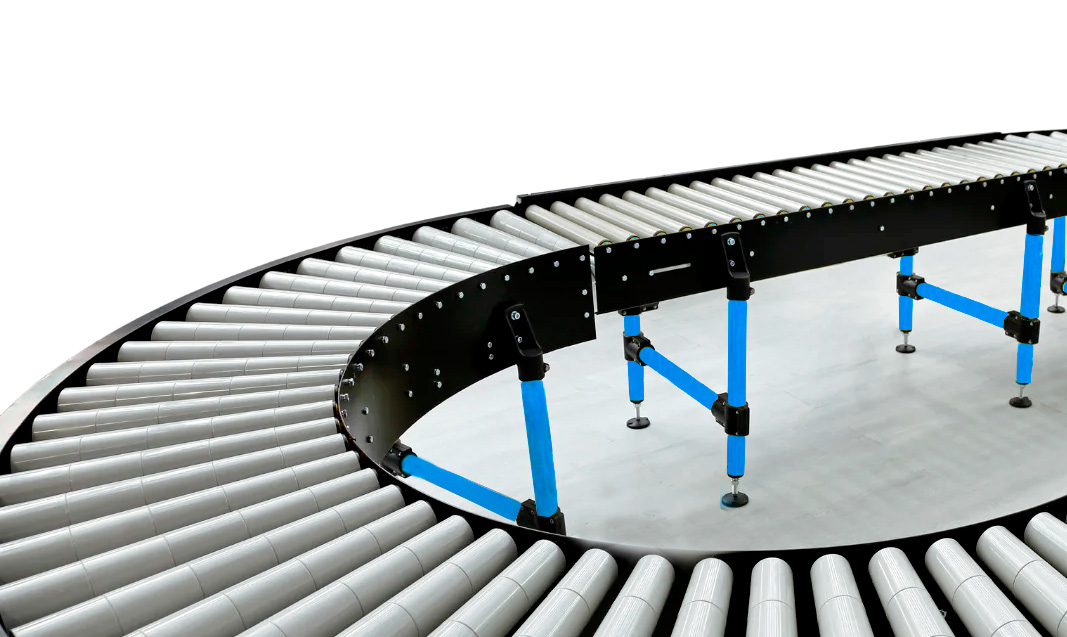
Drums are the rollers that, with their rotation, cause the belt to advance due to the friction of the belt on them (belt transmission) or by the action of sprockets and toothed belts (chain transmission). In a general diagram of the transmission of a belt conveyor belt we have that the movement is generated in the drive drum to which the motor will be connected.
On the other hand, the forward drum will cause the band to return to the top. The tipping drums are positioned at the bottom of the belt at the outlet of the drive drum and at the input of the forwarding drum to modify the angle of exit and entry to them. This ensures that the belt surface that comes into contact with them is optimal for maximum performance and efficiency.
Depending on the location of the driving drum, we can find head or front motorization and central motorization. The power and characteristics of the motor will depend on the type of conveyor belt and its use. Likewise, the ability to automate its operation will be a very important aspect in some production systems.
The frames on which the conveyor belt is mounted and moved are usually made up of a metal structure (painted steel, stainless steel, etc.).
In addition to the basic components related to movement, a conveyor belt has a significant number of accessory systems that ensure the stability of movement, as well as providing versatility and adaptation to different types of loads.
Uses in different industrial sectors.
Easy product distribution.
Made of different materials.
For the transport of different materials (glass, metal, cardboard, marble, plasterboard, packaged products, ...)
No Code Website Builder